> For the complete documentation index, see [llms.txt](https://docs.segments.ai/llms.txt). Markdown versions of documentation pages are available by appending `.md` to page URLs; this page is available as [Markdown](https://docs.segments.ai/readme.md).
# Introduction
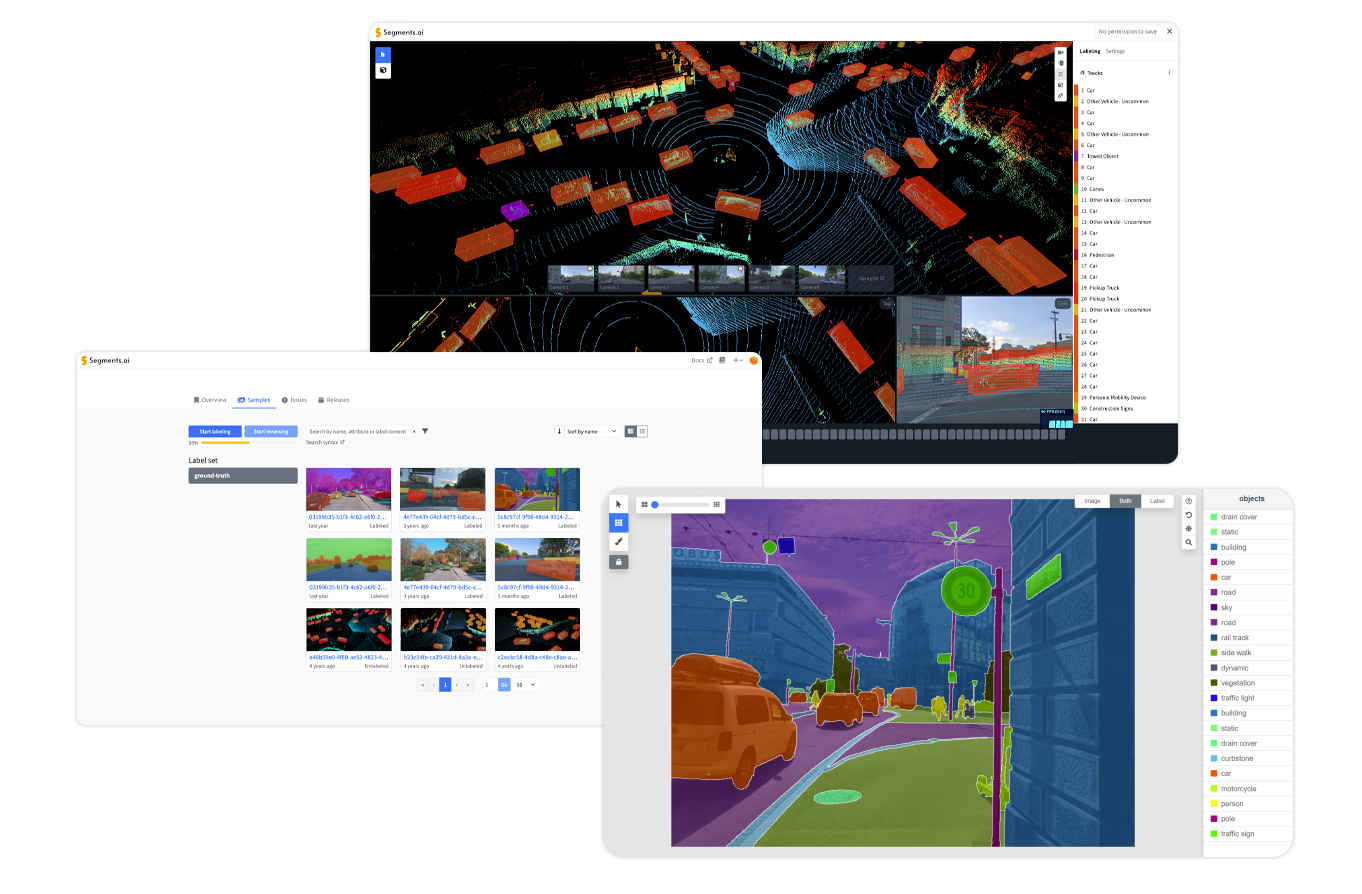
Segments.ai is the training data platform for computer vision engineers and labeling teams. Our powerful labeling interfaces, easy-to-use management features, and extensive API integrations help you iterate quickly between data labeling, model training and failure case discovery.
The documentation is divided into 4 sections:
1. [Tutorials](/tutorials/getting-started.md): end-to-end tutorials where you are guided through a complete project.
2. How-to guides: recipes to solve specific problems relating to
* [Annotating data](/how-to-annotate/label-images.md)
* [Managing data and collaborators](/how-to-integrate/import-data.md)
* [Integrating Segments.ai in your workflows and ML pipelines](/how-to-integrate/import-data.md)
3. [Background](/background/main-concepts.md): provides clarifying background knowledge on certain topics.
4. [Reference](/reference/sample-and-label-types.md): description of the full Python SDK functionality and input and output formats.
---
# Agent Instructions
This documentation is published with GitBook. GitBook is the documentation platform designed so that both humans and AI agents can read, navigate, and reason over technical content effectively. Learn more at gitbook.com.
## Querying This Documentation
If you need additional information that is not directly available in this page, you can query the documentation by asking a question.
Perform an HTTP GET request on the following URL with the `ask` and `goal` query parameters:
```
GET https://docs.segments.ai/readme.md?ask=&goal=
```
`ask` is the immediate question: it should be specific, self-contained, and written in natural language.
`goal` is what the user is ultimately trying to achieve, the reason they need the answer. Sharing it helps GitBook give you a better, more relevant answer. A goal is most helpful when it describes the outcome the user wants rather than restating the question. For example, with `ask=how do I create an API token`, a goal like `automate deployments from our CI pipeline` lets GitBook tailor the answer to that use case.
The response will contain a direct answer to the question and relevant excerpts and sources from the documentation.
Use this mechanism when the answer is not explicitly present in the current page, you need clarification or additional context, or you want to retrieve related documentation sections.